
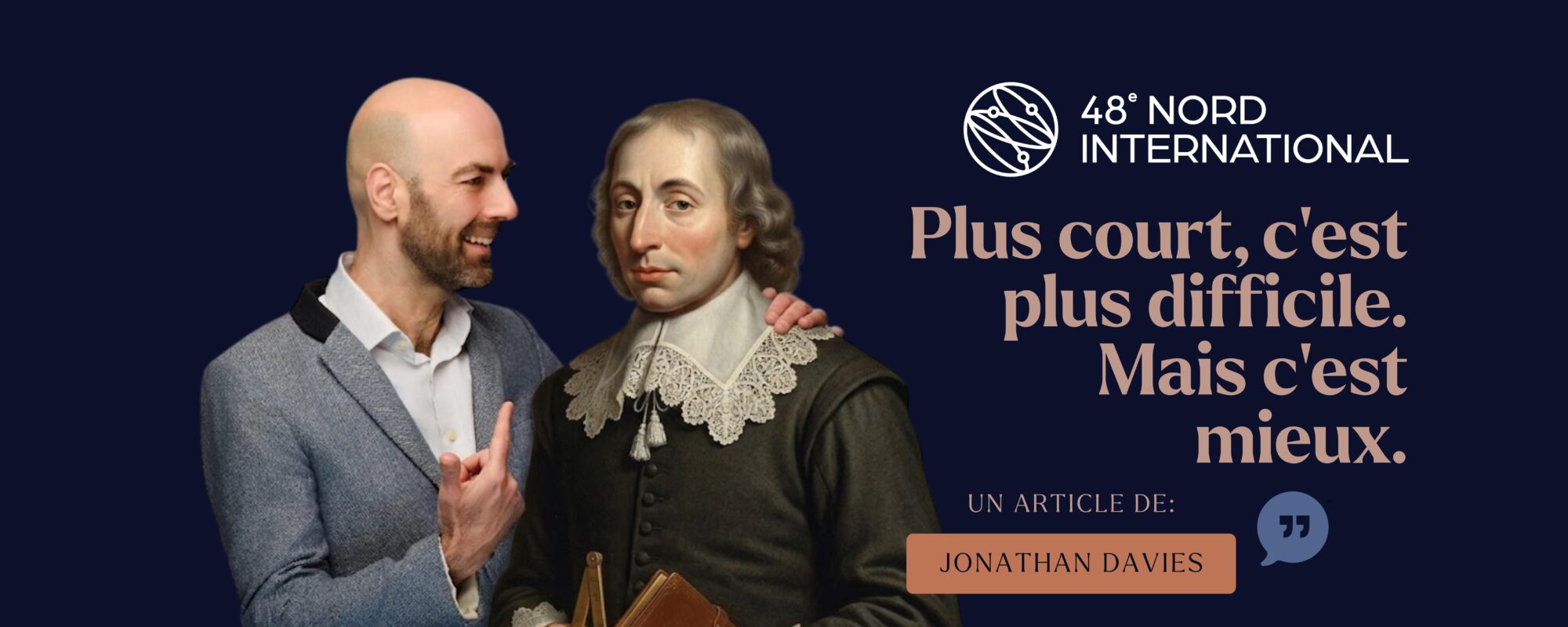
In 1657, the philosopher Blaise Pascal ended a letter with an apology.
“I have made this letter longer than usual because I have not had the time to make it shorter.”
Three hundred and sixty years later, this remains a primordial issue in communications, especially in tech.
Nobody sets out to be boring. Nobody opens a blank document thinking, I will now write something that nobody finishes reading. And yet.
I spent years making branded content for Formula 1 teams and their technical partners. The brief was always the same underneath: take something genuinely complex and make someone care about it in thirty seconds.
That pressure teaches you one thing quickly. Length is not thoroughness. Length is usually fear.
Fear of missing a sector. Fear of leaving out a use case. Fear that the prospect won’t understand unless you explain everything. So you write more. And in writing more, you say less. You don’t become everything to everyone, you end up remembered by no one. Just like Frank Wallace. Remember him? Exactly.
Consider this. Some of the most quoted, most translated, most culturally enduring texts ever written are also among the shortest.
The Lord’s Prayer: 56 words.
The Ten Commandments: 297 words.
The Declaration of Independence: 300 words.
A US government order on the price of cabbage: 26,911 words.
Nobody is quoting the cabbage order (except me). Somewhere, a regulator is proud of it.
In 2023, Silicon Valley Bank issued a press release explaining a $1.8 billion loss. So dense with jargon, so perfectly unclear, that nobody could tell whether the bank was managing a problem or drowning in one. A bank run started within 48 hours. A $200 billion institution, finished. Not by bad news. By bad sentences.
This happens every day in industrial and tech marketing. Your press release. Your website headline. Your pitch deck opener.
The solution is not dumbing down. It is discipline. The answer to closing your next sale does not live in your product or service. It lives in the mind of the potential customer. What do they already believe. What do they already fear. What do they need to understand before they trust you enough to buy.
Before you write anything, answer three questions. Who specifically is reading this. What is the one thing you need them to understand. What do you want them to do next.
If you can’t answer all three in a sentence each, you’re not ready to write yet.
Pascal knew it in 1657. The discipline hasn’t changed.
Write the short one. It takes longer. It’s worth it.
In a foreign market, you have no reputation to fall back on if your message misses. Your first contact is often your only shot. Make every word count.